
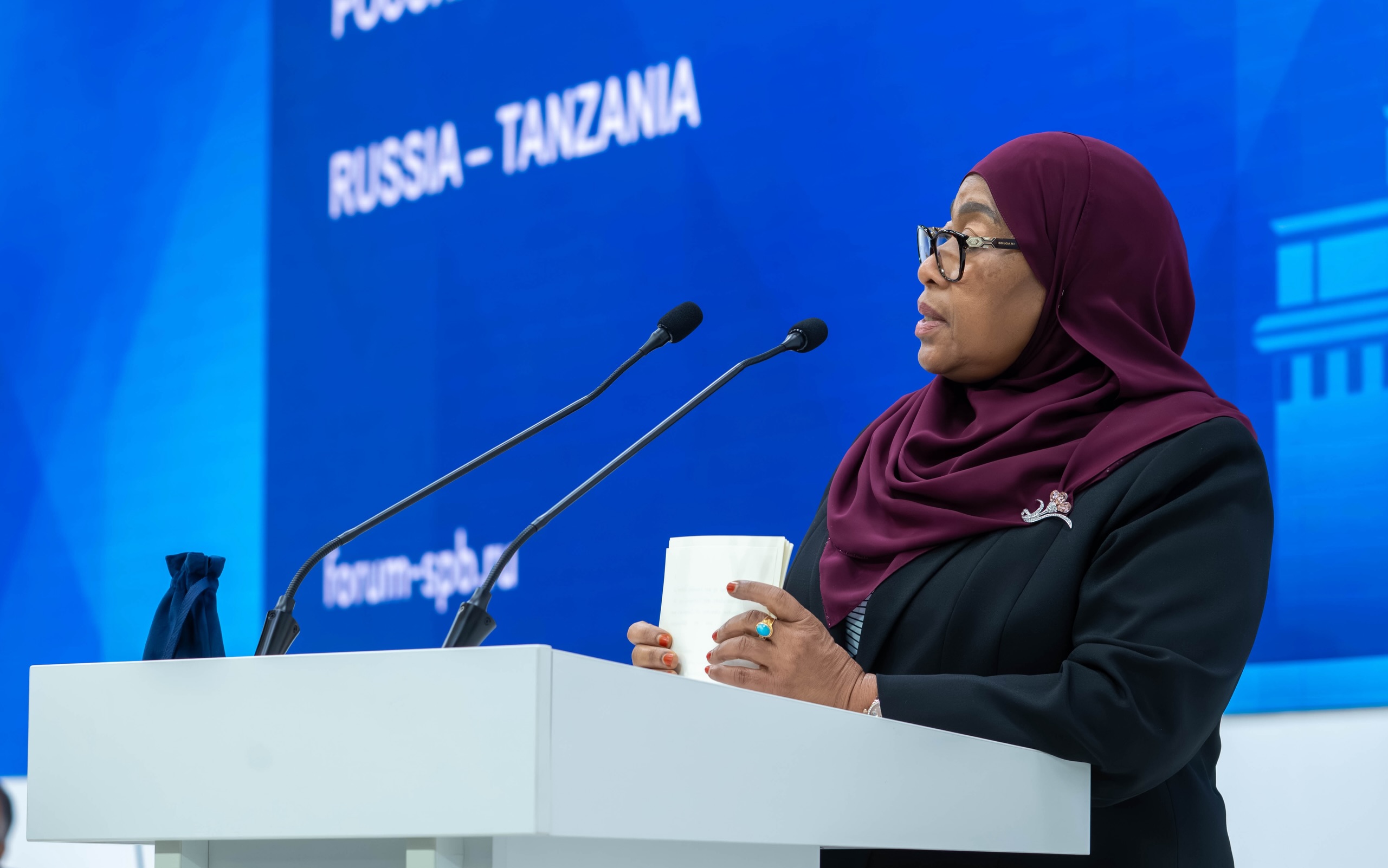
Moscow. Tanzania and Russian have advanced their bilateral economic relations by establishing a comprehensive partnership focused on sophisticated mineral research and geological exploration.
This strategic collaboration, spearheaded by the Geological Survey of Tanzania (GST) and a premier Russian university, signals a concerted effort to leverage modern technology and institutional expertise to unlock Tanzania’s vast sub-surface wealth.
The bilateral framework places particular emphasis on accelerating research into bauxite deposits, a critical raw material for global aluminium production, alongside other high-value industrial minerals.
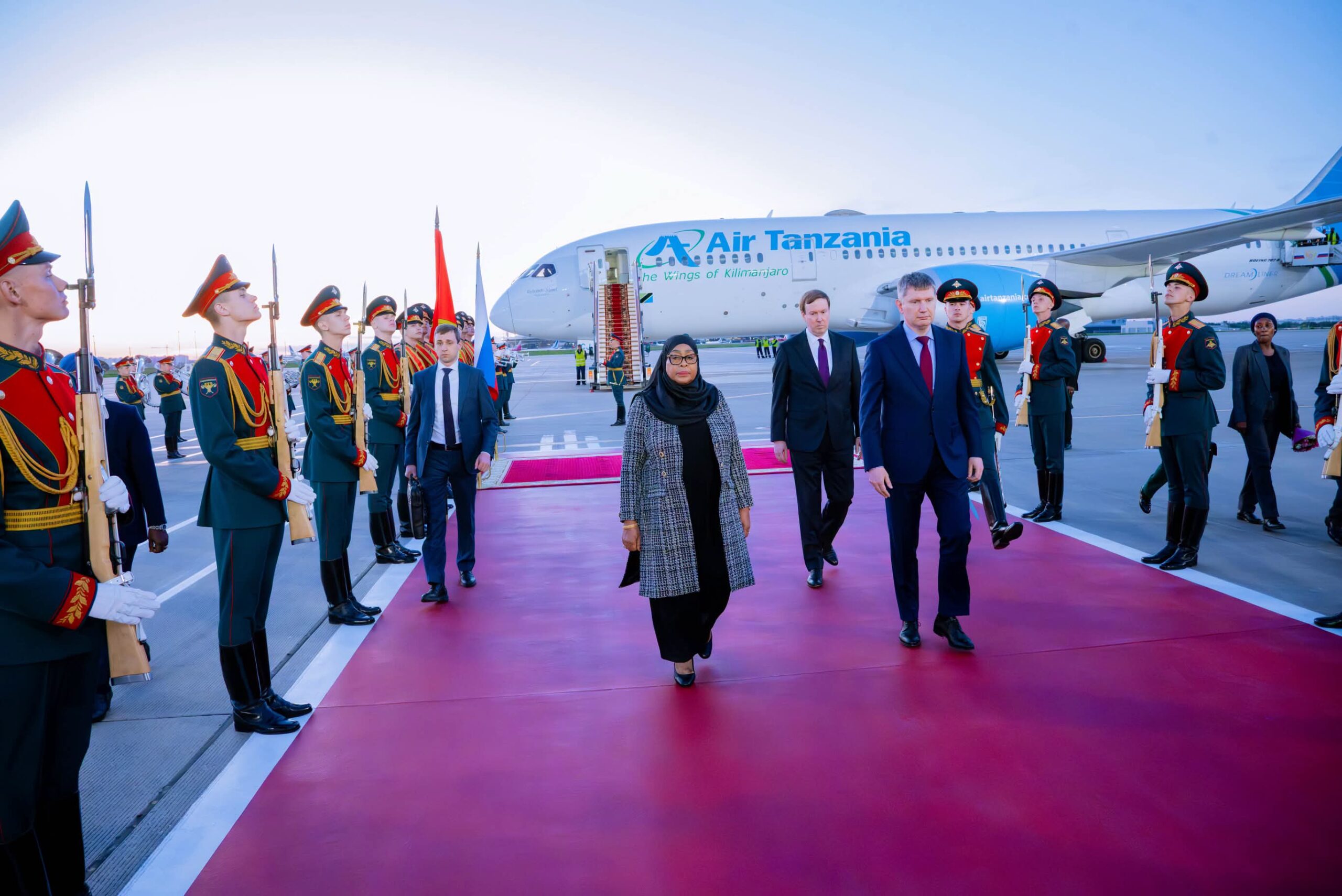
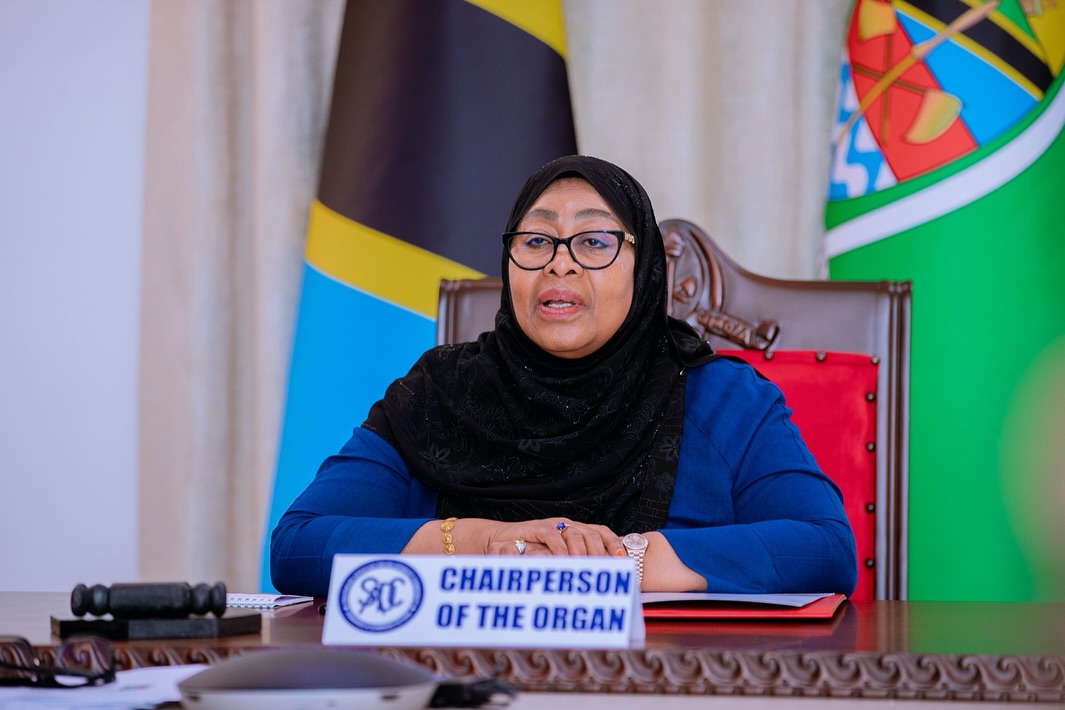
The diplomatic breakthrough was formalised during the official state visit of President Tanzania, Dr Samia Suluhu Hassan, to Moscow.
In alignment with President Samia’s ongoing campaign to expand economic diplomacy and secure foreign direct investment, the Tanzanian Minister for Minerals, Anthony Mavunde, convened high-level bilateral talks in Moscow with a senior Russian government delegation.
The Russian delegation was led by Tetenkin Dmitry Dmitrievich, the Deputy Minister of Natural Resources and Environment for the Russian Federation.
During the deliberations, Mr Mavunde provided an exhaustive overview of the sustained expansion characterising the Tanzanian mining sector.
He underscored that whilst the industry remains a primary pillar of national economic growth, substantial investment opportunities endure, primarily due to a deficit in comprehensive geographical intelligence.
Mr Mavunde emphasised that despite advanced mining activities, only sixteen per cent of Tanzania’s total landmass has undergone high-resolution, in-depth geological survey and exploration.
The Tanzanian government maintains that expanding the geographical scope of high-resolution mapping will significantly broaden the availability of verifiable mineral data, thereby mitigating exploration risks and attracting major international mining conglomerates.
Mr Mavunde expressed confidence that Russia’s advanced historical and contemporary proficiency in geological sciences, paired with state-of-the-art laboratory infrastructure and analytical technologies, makes the federation an ideal partner for this auditing and surveying initiative.
In a formal briefing during the proceedings, Mr Mavunde observed that while the domestic mineral sector continues its rapid upward trajectory, the nation has managed to conduct detailed geological research across only a minor fraction of the territory.
He noted that expanding the area subjected to rigorous research will broaden the scope of available data regarding mineral deposits and substantially heighten investment interest.
Mr Mavunde emphasized that Tanzania views this research domain as an exceptional entry point for reinforcing collaborative ties with the Russian government, given the profound milestones Russia has achieved in geological research and advanced laboratory technological infrastructure.
To expedite the operationalisation of this partnership, Mr Mavunde brought to the attention of Mr Dmitrievich an outstanding Memorandum of Understanding (MoU) drafted between the Geological Survey of Tanzania (GST) and the Russian university.
Mr Mavunde requested high-level intervention from the Russian Ministry of Natural Resources to accelerate the final administrative clearances for the agreement.
Ensuring the prompt finalisation and execution of the MoU is viewed as vital for establishing the legal and institutional frameworks necessary to commence joint research operations.
Beyond academic and institutional research frameworks, the bilateral discussions focused extensively on technical capacity building and knowledge transfer.
The Tanzanian delegation highlighted an immediate national requirement for advanced human capital development within geological surveying, laboratory diagnostics, and mineral analytics.
Mr Mavunde requested the Russian government to facilitate specialised training programs and exchange initiatives, ensuring that Tanzanian geologists, engineers, and laboratory technicians can master contemporary technologies, thereby driving long-term sustainability within the domestic sector.
This newly announced exploration framework builds upon a strong precedent of large-scale, strategic industrial partnerships between Dodoma and Moscow.
Chief among these is the ongoing Mkuju River Project, an entry into uranium mining and processing managed by Mantra Tanzania Limited.
The corporate entity operates as a subsidiary of the Uranium One Group, which is controlled by ROSATOM, the Russian Federation’s State Atomic Energy Corporation.
The Mkuju River Project operates under a joint-venture framework wherein the Government of Tanzania maintains a twenty per cent non-dilutable free-carried interest.
The economic viability and strategic importance of the Mkuju River asset were further solidified in July 2025, when President Samia officially commissioned an advanced uranium processing pilot plant at the site.
The facility represents the first technological installation of its nature in the East African region.
With capital expenditure projected to exceed Sh3.06 trillion, the Mkuju River Project is positioned to become a transformative driver for national macroeconomic growth, high-skilled employment creation, and broader infrastructural developments within the regional energy sector.
The successful execution of the uranium asset serves as the primary blueprint for the expanded geological partnership discussed in Moscow.
Through the optimization of state-led economic diplomacy, the Tanzanian government aims to transform its mining landscape from primary extraction to an ecosystem underpinned by rigorous scientific research, local value addition, and advanced technological integration.