

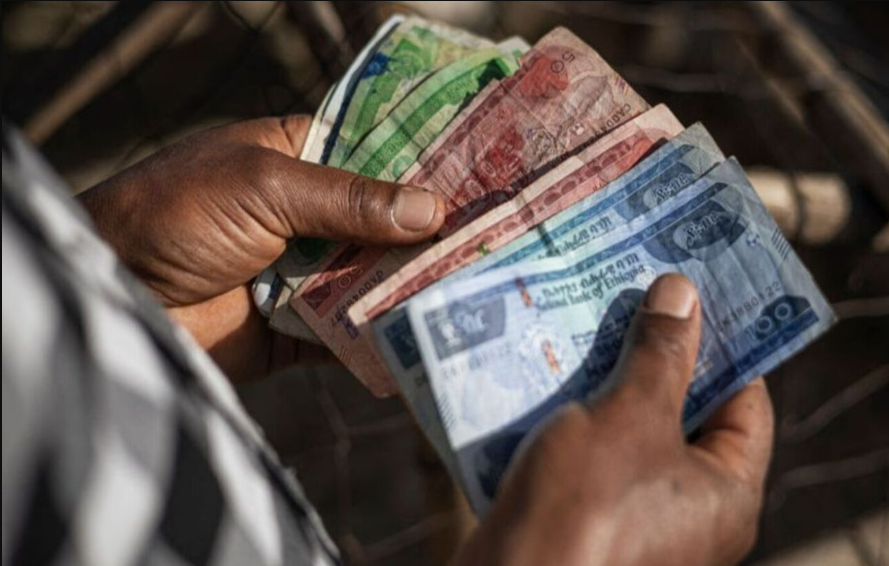
Ethiopia moves to print national currency at home
Addis Ababa. Ethiopia has announced plans to stop printing its national currency abroad and instead produce the Ethiopian Birr domestically by 2030, in a move aimed at strengthening economic sovereignty and reducing dependence on foreign service providers.
For decades, Ethiopia has relied on overseas security printing firms, particularly UK-based company to manufacture its banknotes.
The arrangement has ensured access to advanced security features but has also imposed a significant financial burden on the East African nation.
According to government estimates, Ethiopia spends about $100 million annually on printing its currency overseas.
Officials say the cost has become increasingly difficult to justify as the country seeks to preserve foreign exchange reserves and build domestic industrial capacity.
The government has therefore launched a new initiative through Ethiopian Investment Holdings to establish local banknote production facilities.
The objective is to print the Birr entirely within Ethiopia by the end of the decade.
Prime Minister Abiy Ahmed said the project is part of a broader strategy to strengthen economic self-reliance and enhance national control over critical financial infrastructure.
Officials argue that domestic production will not only reduce costs but also improve the country’s ability to manage currency supply and respond more effectively to economic challenges.
The initiative comes at a time when many African countries are reassessing their dependence on foreign suppliers for strategic services.
Currency printing remains one of the least discussed but most sensitive aspects of national sovereignty, as banknotes are symbols of state authority and economic independence.
Across Africa, more than 40 countries continue to outsource the production of their banknotes to specialised printing firms in Europe.
Security printers in the United Kingdom, Germany and France have long dominated the market due to their technological expertise and decades of experience in producing highly secure currency.
However, a growing number of African governments are seeking to localise key economic functions.
Advocates of the approach argue that domestic production can save foreign exchange, create skilled jobs and strengthen national institutions.
Ethiopia’s move is therefore being viewed as more than a technical change in currency production.
Analysts say it reflects a wider trend across the continent towards greater economic autonomy and stronger control over strategic assets.
The country has in recent years pursued several reforms aimed at modernising its economy, attracting investment and expanding domestic industrial capacity.
Establishing local currency printing is expected to form part of that broader transformation agenda.
While significant investment will be required to build secure printing facilities and acquire specialised technology, officials believe the long-term benefits will outweigh the costs.
If successfully implemented, Ethiopia would join a relatively small group of African nations capable of producing their own banknotes.
The development could also encourage other countries on the continent to consider similar initiatives as governments seek to reduce external dependencies and strengthen economic resilience.
For many observers, the plan represents a symbolic and practical step towards deeper financial independence.
It also highlights a growing determination among African states to retain greater control over institutions and processes that are central to national economic sovereignty.