

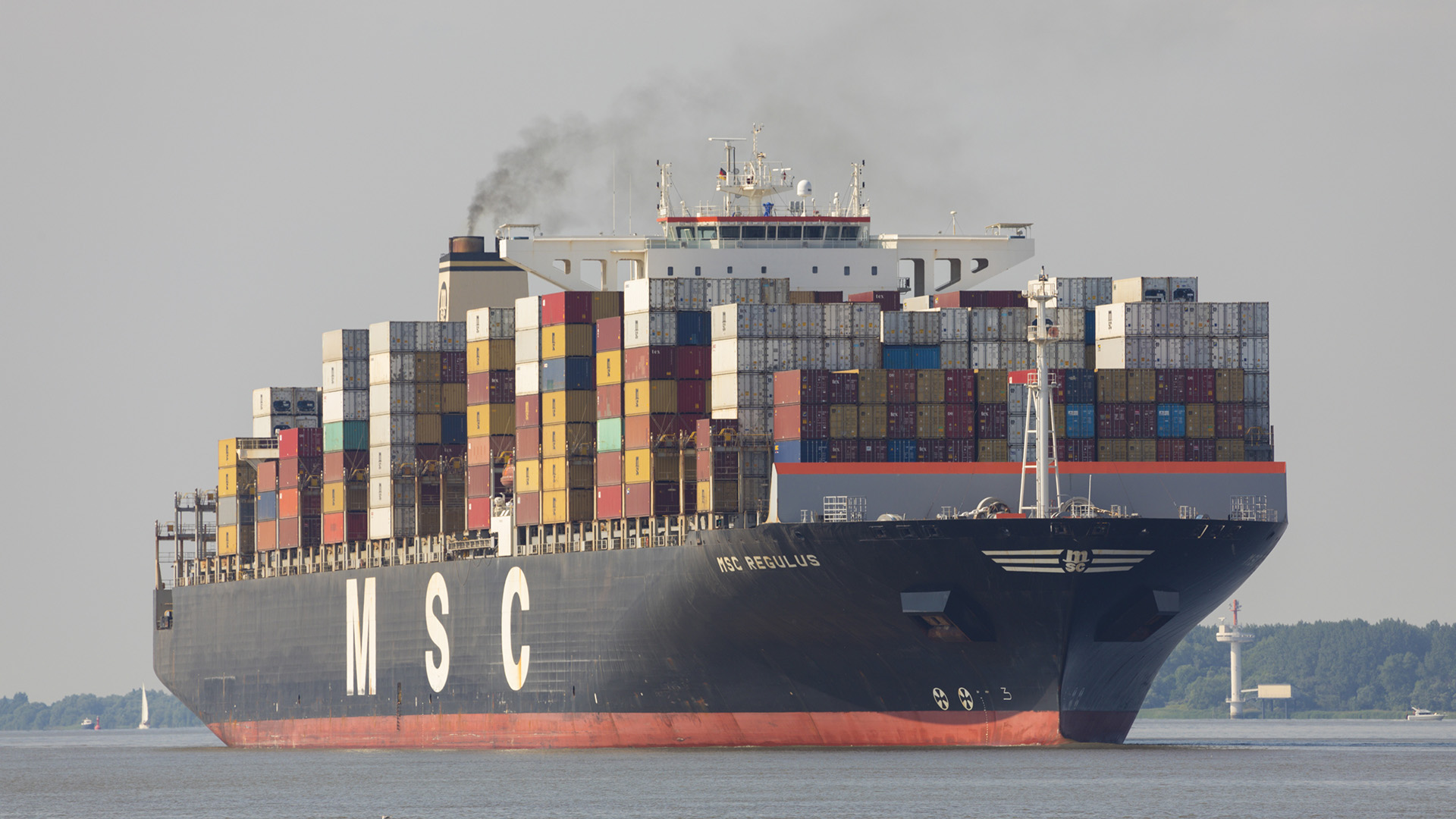
London. Shipping and logistics giant MSC Mediterranean Shipping Company has announced the imposition of what it describes as a war surcharge on a number of key trade routes to Africa and the Indian Ocean islands.
The measure, effective from March 5, 2026, follows widespread disruption to maritime traffic through two of the world’s most critical chokepoints, the Strait of Hormuz and the Bab El-Mandeb Strait.
The surcharges apply to cargoes originating from the Indian subcontinent, including India, Pakistan, Sri Lanka and Bangladesh, bound for East Africa, Somalia, Mozambique and Indian Ocean islands.
It also applies to cargoes from Gulf nations, Bahrain, Iraq, Kuwait, Oman, Qatar, Saudi Arabia and the United Arab Emirates, destined for West, East and South Africa, Mozambique and Indian Ocean islands.
For cargoes from the Indian subcontinent, the war surcharge is set at $500 per 20-foot equivalent unit (TEU) for dry containers and $1,000 per TEU for refrigerated containers.
For shipments from Gulf States, charges are higher: $2,000 for 20-foot containers, $3,000 for 40-foot containers and $4,000 for refrigerated containers. The measures will remain in place until further notice.
MSC has stated that the additional costs are necessitated by elevated security risks and operational challenges arising from the ongoing Middle East crisis, which has effectively curtailed normal traffic through the Strait of Hormuz.
The strait is a vital maritime artery through which a significant portion of the world’s oil and liquefied natural gas has traditionally passed.
The dual disruption at Hormuz and Bab El-Mandeb has compelled major carriers to reroute vessels, extend transit times and incur increased fuel, insurance and risk mitigation costs.
The Strait of Hormuz crisis stems from an escalation of hostilities between Iran and Western allies.
Attacks on commercial vessels, threats to close the strait and the suspension of insurance coverage have resulted in near-total cessation of normal shipping movements through the corridor.
This has had immediate knock-on effects for energy markets, supply chains and freight costs.
The strait historically accounts for approximately 20 percent of global seaborne oil and substantial liquefied natural gas flows.
Similarly, the Bab El-Mandeb Strait, which links the Red Sea to the Gulf of Aden, has experienced heightened risk following regional instability.
Previous disruptions in this corridor, linked to conflicts and attacks in Yemen and the Red Sea, have forced maritime operators to divert around the Cape of Good Hope, adding days to voyage times and significantly increasing operating expenses.
Industry observers note that these war surcharges are symptomatic of broader stress on global supply chains, which are already contending with delayed deliveries, elevated insurance premiums and rising freight tariffs across multiple trade lanes.
The impact is expected to reverberate through global trade for as long as maritime risk levels remain elevated in these pivotal sea routes.