

Dodoma. Rising debt obligations and statutory government commitments are expected to consume a large share of Tanzania’s proposed Sh62.3 trillion budget for the 2026/27 financial year, according to the government’s budget framework presented to Parliament.
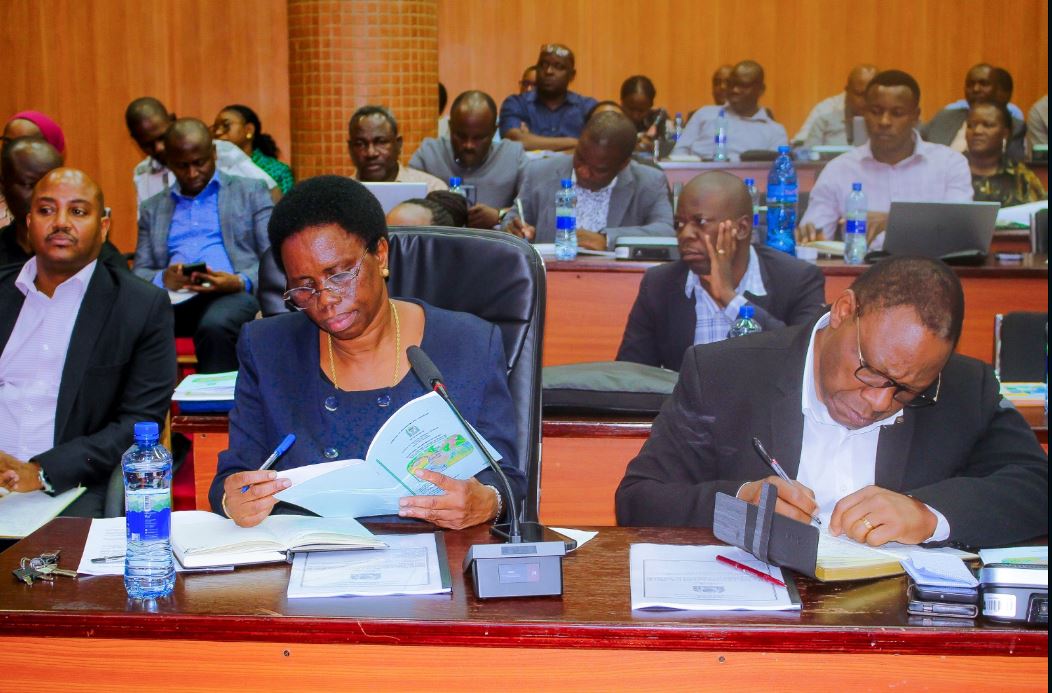
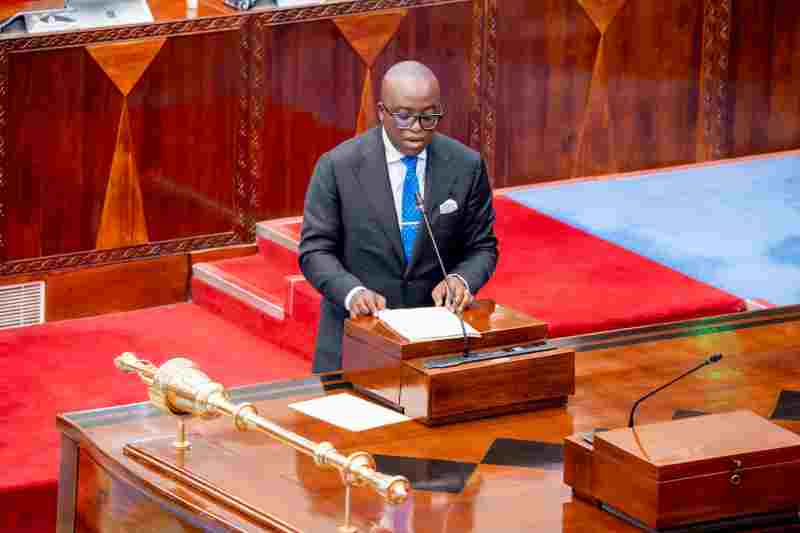
Presenting the budget ceiling in Dodoma, Finance Minister, Khamis Mussa Omar, on March 11. 2026 said most of the projected increase in public spending will be directed towards unavoidable government obligations.
These include public sector salaries, servicing of national debt, pension contributions, contractor claims and transfers to local government authorities.
Together, these commitments account for roughly three quarters of the projected expansion in government expenditure for the coming fiscal year.
The proposed budget represents an increase of slightly more than ten percent compared with the current financial year.
The expansion reflects growing fiscal demands linked to debt repayments, wage commitments and funding requirements for essential public services.
Government projections indicate that debt servicing alone will remain a major pressure on public finances.
Repayment of maturing obligations is expected to reach about Sh7.8 trillion during the 2026/27 financial year.
To finance the budget, the government plans to mobilise about Sh46.8 trillion in total revenue.
Tax collection is expected to generate the largest share at around Sh37 trillion.
Non-tax sources are projected to contribute approximately Sh9.2 trillion, including transfers from local government authorities.
External grants are expected to remain modest, with estimates indicating inflows of about Sh563 billion.
To close the financing gap, the government plans to borrow both domestically and externally.
Net borrowing requirements are projected at about Sh7.4 trillion.
A large portion of this will come from the domestic market, while concessional and commercial external loans will provide additional financing.
Officials say the fiscal framework also seeks to maintain macroeconomic stability.
The government intends to keep the budget deficit below three percent of gross domestic product in line with regional fiscal commitments under the East African Community and the Southern African Development Community.
Economic projections underlying the budget framework indicate that Tanzania’s economy is expected to grow by about 6.3 percent in 2026/27.
Inflation is projected to remain within the range of three to five percent.
Foreign exchange reserves are also expected to remain stable, covering at least four months of imports of goods and services.
The budget framework forms the basis for detailed expenditure proposals that ministries and government agencies will submit as preparations continue for the 2026/27 national budget.