
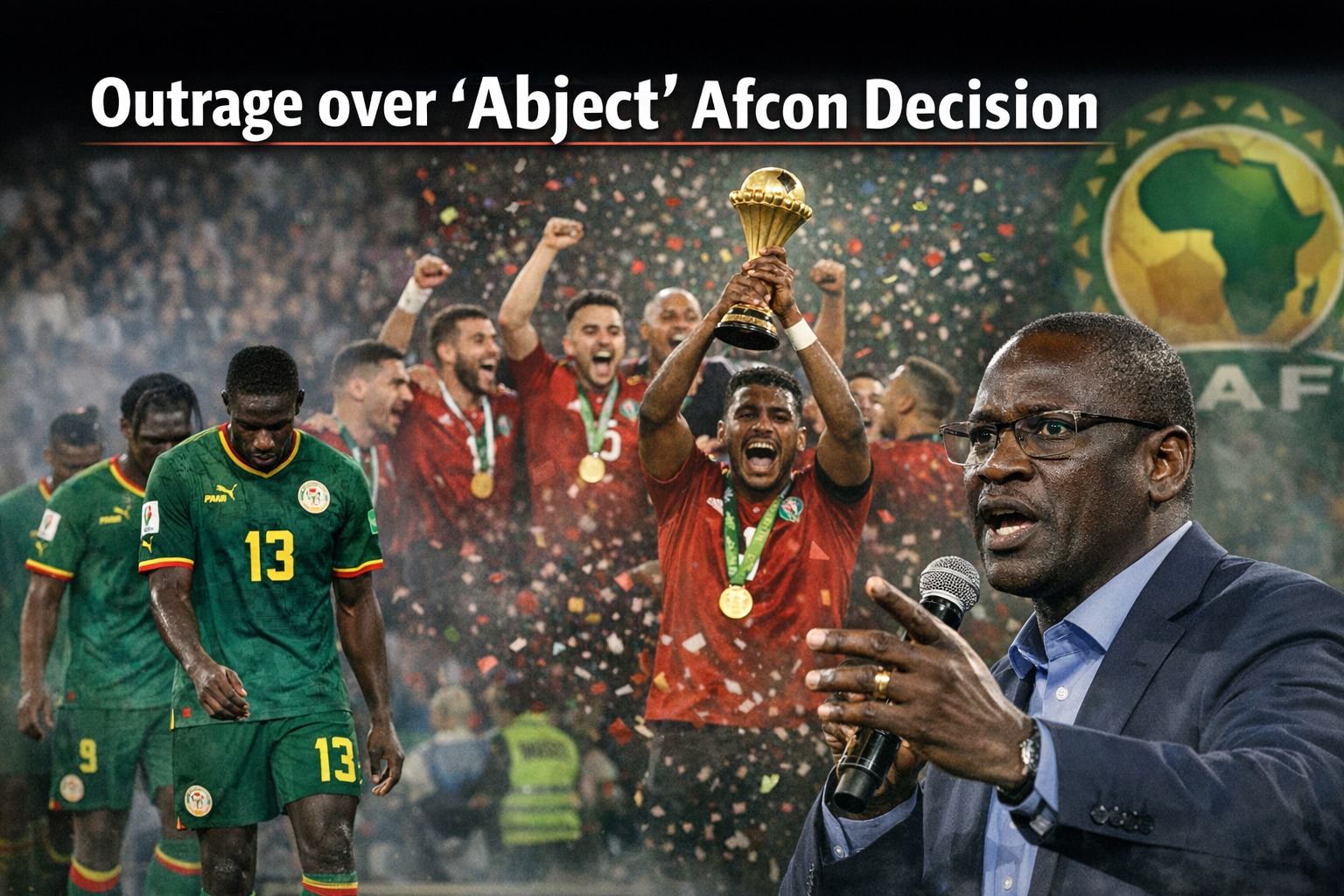
In a move that has sent shockwaves through African football, a senior executive of the Confederation of African Football has described the controversial decision to strip Senegal of the Africa Cup of Nations crown as “abject” and insisted it must be unequivocally condemned.
Senegal, who triumphed 1-0 over Morocco in a thrilling January final, saw their historic victory overturned after the team staged a protest by walking off the pitch in response to a stoppage-time penalty awarded to the hosts.
Play was halted for seventeen tense minutes, during which Morocco’s Brahim Diaz missed the crucial penalty, and Senegal went on to claim the winning goal in extra time through Pape Gueye.
Yet, in a ruling following an appeal by the Moroccan Football Association, CAF adjudicated that Senegal’s walk-off constituted a forfeit, officially recording the match as a 3-0 victory for Morocco and awarding them the coveted trophy.
Augustin Senghor, CAF executive committee member and former president of the Senegalese Football Federation, voiced his indignation in no uncertain terms:
“In situations such as this, we must fight injustice with every fibre of our being. Football is decided on the field, not in boardrooms. To strip Senegal of the trophy in this manner is an affront to the principles of fair play. It is, quite frankly, abject, and it demands public denunciation.”
The FRMF defended the verdict, emphasising that it “upholds respect for rules indispensable to the proper functioning of international competitions” and that it “clarifies the framework for handling similar circumstances in the future, reinforcing the consistency and credibility of African and international football.”
Senghor, however, has accused the FRMF of exerting undue influence over CAF’s decision-making process.
“Senegal will contest this ruling vigorously. I am confident that, if we appeal to the Court of Arbitration for Sport, justice will prevail and the trophy will remain in Senegal, where it rightfully belongs,” he asserted.
The ruling has provoked widespread criticism from former coaches across Africa, including notable figures from Cameroon, Ghana, and Senegal.
It has also drawn scrutiny of Gianni Infantino, raising questions about CAF’s independence and governance at the highest level.
Meanwhile, Morocco is poised to host as one of the joint nations for the 2030 FIFA World Cup, alongside Spain and Portugal, with commemorative matches in Uruguay, Argentina and Paraguay, marking the centenary of the inaugural World Cup final in 1930.
Observers warn that this unprecedented decision risks eroding confidence in African football, overshadowing the excitement of the tournament, and tarnishing CAF’s reputation.
Fans, officials, and pundits alike are engaging in impassioned debate over the future of the sport, fairness, and the integrity of competition on the continent.
As the dust settles on a tournament hailed for its thrilling play and electric atmosphere, the shadow of controversy now looms large over African football’s governing body, leaving a profound question: can justice be restored, or has Senegal’s triumph been irrevocably marred by office-bound decisions?