
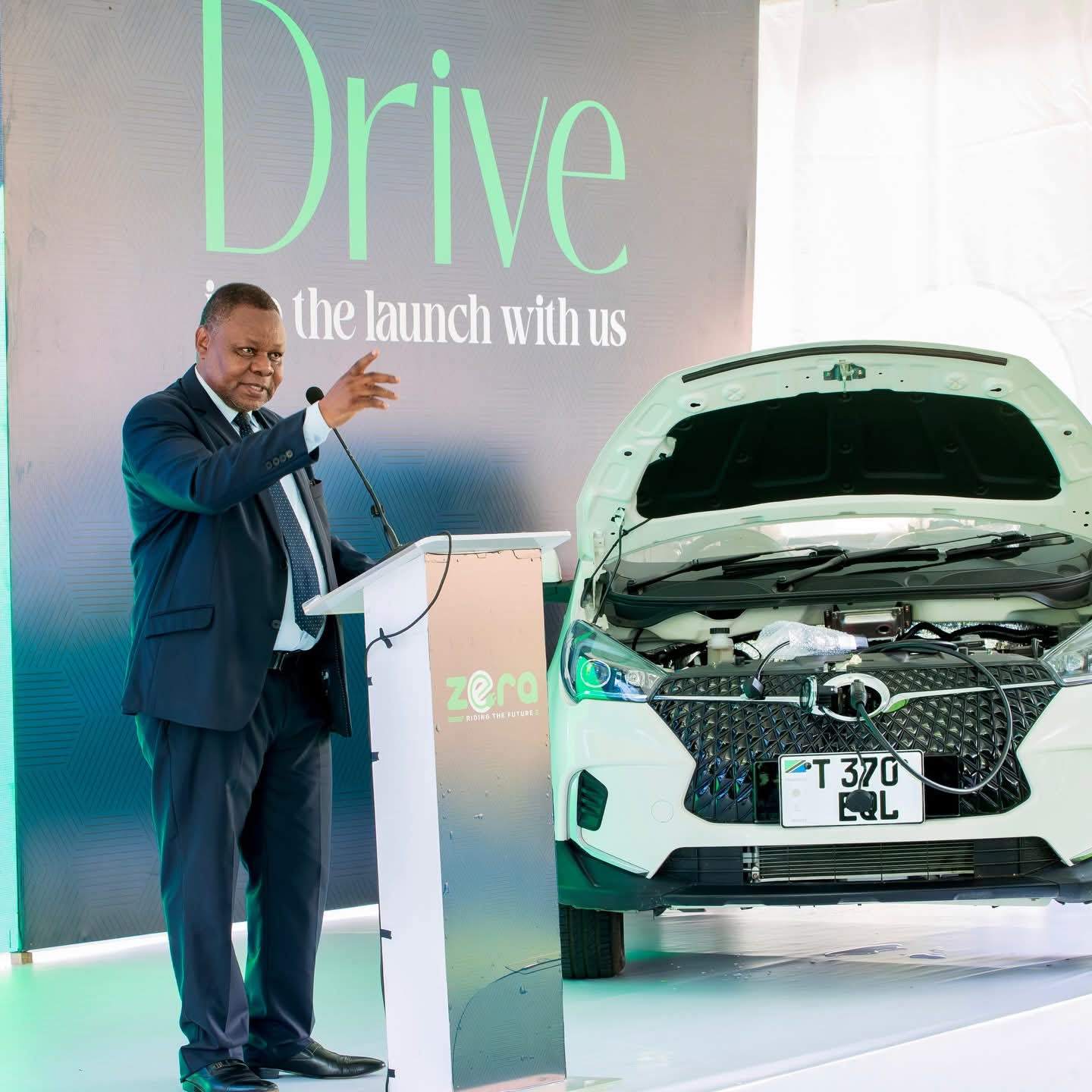
Dar es Salaam. Permanent Secretary in the Ministry of Energy, Mr Felchesmi Mramba, has officiated the launch of electric vehicle operations in the country.
The operations are under a private firm, Dow Elef Auto EV (ZERA) Limited.
Speaking during the launch on March 6, 2026, Mr Mramba said electric vehicles are about 85 percent cheaper to operate per kilometre than petrol or diesel vehicles in Tanzania.
“Research shows that the cost difference is significant and could help motorists reduce transport expenses,” he said.
Mr Mramba said an average fuel-powered vehicle costs about Sh200 per kilometre to run. In contrast, an electric vehicle costs around Sh25 per kilometre.
“This cost comparison clearly shows that electric vehicle technology is far more affordable and can help citizens reduce transport costs,” he said.
He noted that the launch marks an important milestone in the transformation of the country’s transport sector.
According to him, the initiative aligns with the government’s efforts to promote investment and expand the use of clean energy technologies.
Mr Mramba said the government has already created an enabling environment for the development of electric mobility.
He cited the adoption of the National Electric Vehicles Policy Framework in December 2024 as a key step.
The framework aims to encourage local production of electric vehicles, expand their adoption and integrate the sector with renewable energy sources.
It also seeks to support the development of charging infrastructure across the country.
Mr Mramba added that Tanzania has continued to make progress in electricity generation.
Installed capacity has risen to more than 4,500 megawatts.
Electricity access reached 85.5 percent in 2025.
He said the expansion of power supply is intended to strengthen various sectors of the economy.
These include modern and environmentally friendly transport systems with lower operating costs.
Across Africa, the number of electric vehicles has surpassed 30,000 units.
East Africa is emerging as a growing hub for innovation and adoption in the electric mobility sector.